


Growing passionfruit in pots is a great way to enjoy this tropical fruit, even if you have limited space. Passionfruit vines are vigorous growers and, when given the right conditions, will reward you with a steady supply of fragrant, tangy fruit. Whether you’re an apartment dweller with a sunny balcony or you just want to control the spread of your vine, pots are the perfect solution.
1. Choosing the Right Pot and Soil
The first step to success is picking a pot that’s large enough to support the vigorous root system of a passionfruit vine. A pot that’s at least 40–50 cm deep and wide is ideal. Ensure it has plenty of drainage holes to prevent waterlogging. For soil, choose a premium potting mix with good drainage. A mix designed for fruiting plants, enriched with compost and slow-release fertiliser, will give your vine the best start.
2. Position and Climate
Passionfruit loves warmth and sunshine. Place your potted plant in a location that gets at least 6–8 hours of sunlight daily. In cooler climates, move the pot to a warmer, sheltered area during winter, or consider wrapping the pot in insulating material to protect the roots.
3. Watering and Feeding
Potted plants dry out more quickly than those planted in the ground. Water your vine regularly, especially during flowering and fruiting seasons, but avoid letting the soil become soggy. A liquid fertiliser high in potassium every 2–4 weeks will encourage flowers and improve fruiting. Avoid too much nitrogen, which can lead to excessive leaf growth and fewer fruits.
4. Training and Trellising
Passionfruit vines need support to grow properly. Install a trellis, wires, or a sturdy frame near your pot. Train the main vine upward and encourage side shoots to spread horizontally. This improves airflow and increases sunlight exposure for better fruiting.
5. Pollination and Fruit Set
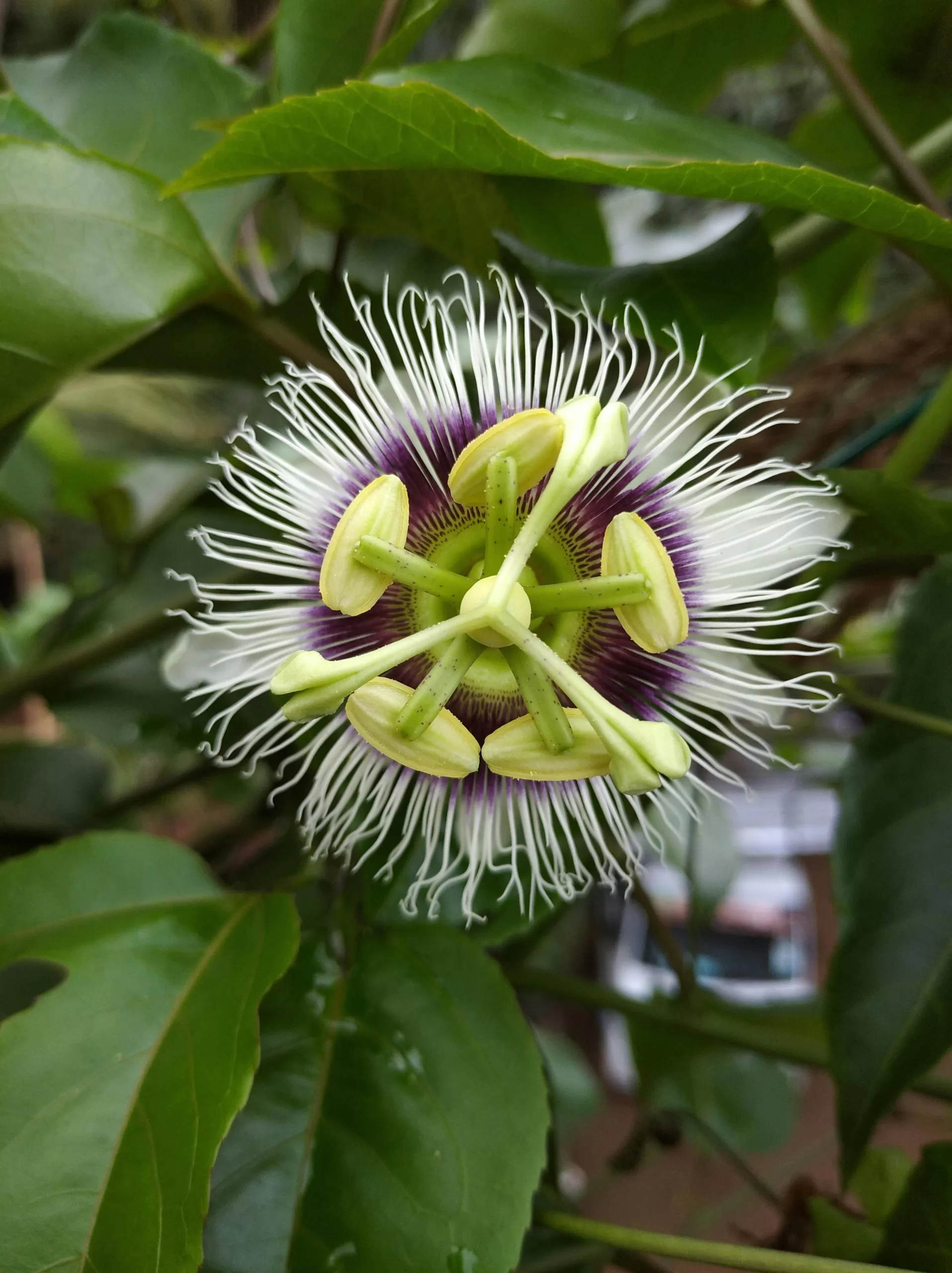
Some passionfruit varieties are self-pollinating, but others may benefit from hand pollination. Use a soft brush to transfer pollen between flowers, especially if you’re growing on a balcony where pollinators are scarce.
6. Common Problems
Watch out for pests like aphids and scale insects. Treat infestations early with insecticidal soap or horticultural oil. Root rot can also occur if drainage is poor, so always ensure excess water can escape.
Conclusion
With the right care, a potted passionfruit can thrive for years, producing delicious fruit that tastes even better when home-grown. If you’re just starting, varieties like ‘Nellie Kelly’ are particularly suited for pots, as they’re hardy and prolific.
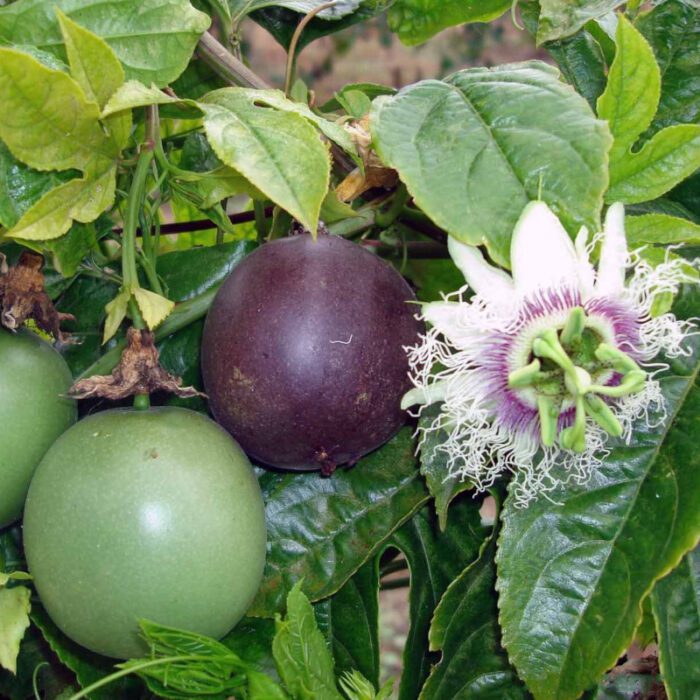
Purple Passionfruit
Purple Passionfruit
Fragrant, vibrant, and packed with tropical flavor, passionfruit is a true garden gem. Its deep purple skin wrinkles as it ripens, revealing bright yellow pulp filled with intense, aromatic sweetness and a tangy kick.
Passionfruit vines are fast-growing and productive, offering stunning flowers and delicious fruit throughout the warmer months. Ideal for warm climates and well-drained soil, they thrive on fences, trellises, or pergolas—adding beauty and bounty to any backyard. Whether eaten fresh, added to desserts, or turned into syrup, passionfruit is as versatile as it is irresistible.
Out of stock